Ball vs Gate Valve: What Are the Design Differences?

Ball vs Gate Valve: What Are the Design Differences?

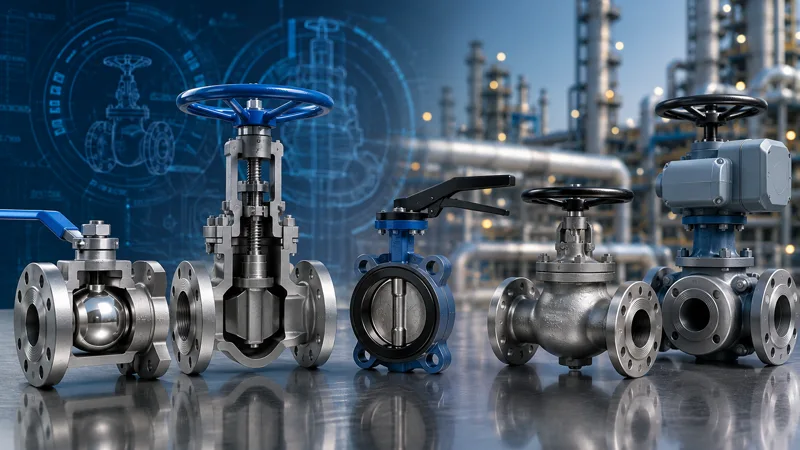
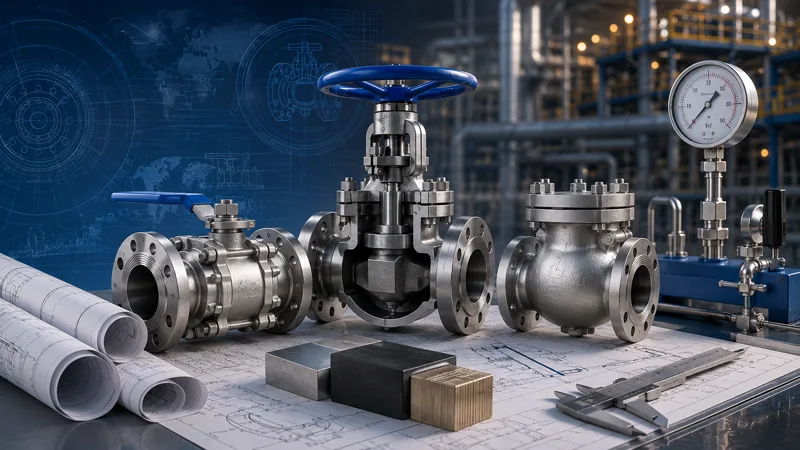
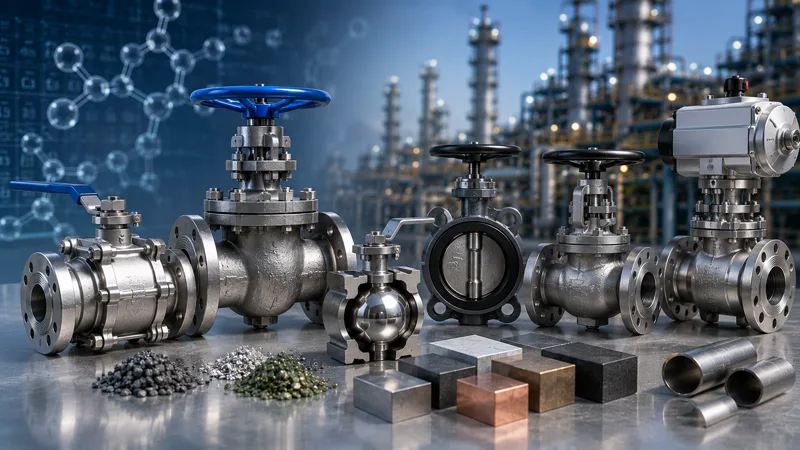
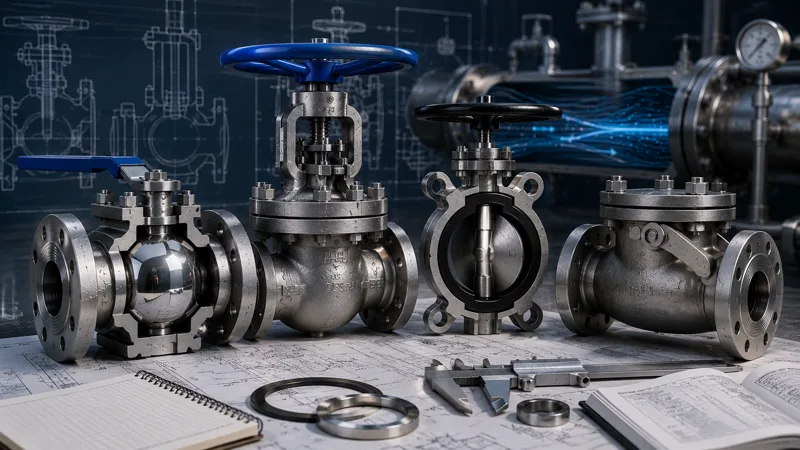
Ball valves and gate valves differ primarily in operating mechanism and internal closure design. A ball valve uses a quarter-turn rotating spherical element for rapid isolation, while a gate valve uses a multi-turn linear-moving gate to block or allow flow. Ball valves provide faster actuation and compact installation, whereas gate valves offer straight-through full-bore flow with negligible pressure drop in large-diameter pipelines. Both types are fundamental isolation valve categories within the industrial valve types overview.

Key Takeaways

  • Ball valves are quarter-turn rotary valves; gate valves are multi-turn linear valves — the 90-degree versus 10-to-30-turn actuation difference determines their respective suitability for automated, frequent-cycle, and emergency shutdown service versus infrequent manual operation.
  • Ball valves offer faster operation and compact design — the short face-to-face dimension, lower body weight, and single quarter-turn stroke make ball valves the standard choice for automated on/off and ESD service at Class 150 through Class 2500 per API 6D.
  • Gate valves provide minimal pressure drop in large-diameter pipelines — the gate retracts completely into the bonnet when fully open, presenting an unobstructed full-bore flow path with no internal components in the flow stream.
  • Selection depends on pressure class, nominal size, operating frequency, and maintenance requirements — ball valves dominate NPS 2 through NPS 16 in automated service; gate valves dominate NPS 12 and above in infrequent-operation large-pipeline service.

How It Works

Ball Valve Rotary Operation

A ball valve controls flow by rotating a spherical closure element with a machined through-bore inside the valve body. When the bore axis aligns with the pipeline axis, the valve is fully open and flow passes through the bore with minimal restriction — the fully-open Cv of a full-port ball valve approaches the theoretical maximum for the pipe bore diameter. When the stem is rotated 90 degrees, the solid wall of the sphere faces the pipeline, blocking the flow path completely. The entire open-to-close stroke requires only 90 degrees of shaft rotation — making ball valves inherently compatible with pneumatic rack-and-pinion and scotch yoke actuators, electric quarter-turn actuators, and manual lever operators. In floating ball designs, line pressure pushes the ball against the downstream seat to create the sealing contact stress. In trunnion-mounted designs at larger bore sizes and higher pressure classes, the ball is mechanically supported and spring-loaded seats maintain sealing contact independent of differential pressure. The complete ball valve design and operating principles are addressed in the what is a ball valve reference.

Gate Valve Linear Operation

A gate valve controls flow by raising or lowering a flat wedge or parallel slide gate perpendicular to the flow direction, driven by a threaded stem that converts rotational handwheel motion into linear gate travel. When the gate is fully raised into the bonnet cavity, the flow path is completely unobstructed — the body presents a straight-through bore equal to the pipeline diameter with no valve components in the flow stream. When the handwheel is turned in the closing direction, the gate descends through the body until the gate faces contact the body seat rings on both sides simultaneously — with wedge gate designs, the taper creates mechanical wedging action that generates high sealing contact stress. Full open-to-close travel requires 10 to 30 stem rotations depending on nominal size — a Gate valve’s multi-turn operation is inherently slower than a ball valve’s quarter-turn and is not compatible with quarter-turn actuators. The threaded stem also introduces more wear surfaces than a ball valve stem, increasing long-term maintenance requirements in high-cycle service. The complete gate valve design and operating principles are addressed in the what is a gate valve reference.

Main Components

Closure Element Comparison

The closure element is the most fundamental design difference between ball and gate valves — it determines the valve’s flow characteristic, sealing mechanism, and mechanical interface with the seats and body. A ball valve’s spherical closure element is a precision-machined sphere with a cylindrical through-bore whose diameter defines the valve’s Cv — the sphere rotates within two seat rings that maintain sealing contact against its surface in the closed position. The two primary ball valve configurations address different combinations of bore size and pressure class: floating ball designs — where the ball is unsupported and pushed against the downstream seat by line pressure — are suited for NPS 4 and below at Class 600 and lower, as detailed in the floating ball valve reference; trunnion-mounted designs — where the ball is mechanically anchored by upper and lower trunnion shafts and the seats are spring-loaded — are standard for NPS 6 and above at Class 600 and higher per API 6D, as detailed in the trunnion-mounted ball valve reference. A gate valve’s closure element is a flat or wedge-shaped gate disc that moves vertically within the body — the solid wedge (most common, per API 600), flexible wedge (reduced thermal binding risk), split wedge (self-aligning to worn seats), and parallel slide (steam service standard) configurations each address specific operating conditions, but all share the characteristic that the gate must travel several inches vertically to complete the open-to-close stroke, compared to the ball valve’s simple 90-degree rotation.

Stem Design Differences

The stem design reflects the fundamental mechanical difference between the two valve operating principles. A ball valve stem is a short shaft — typically 3 to 8 inches long — that transmits quarter-turn rotational torque from the actuator to the ball. Anti-blowout stem designs with a shoulder that prevents ejection under line pressure are standard per API 6D. Stem sealing uses PTFE or graphite packing over a very short stem length, minimizing the packing surface area and resulting fugitive emission risk. A gate valve stem is a long threaded rod — 12 to 60 inches or more depending on nominal size — that translates handwheel rotation into linear gate movement through a threaded nut on the gate. Rising stem (OS&Y) designs extend the stem above the yoke as the valve opens, keeping threads external and providing visual position indication; non-rising stem designs keep the stem within the body envelope for installations with limited headroom. The increased stem length and thread engagement of gate valves create more potential wear points and greater packing wear per operating cycle compared to ball valve stems. The complete design criteria for rising and non-rising stem configurations are addressed in the rising vs non-rising stem reference.

Advantages

Isolation Performance Comparison

Ball valves and gate valves offer complementary performance profiles in isolation service — neither is universally superior across all criteria. Ball valves provide unambiguous superiority in operating speed (quarter-turn versus multi-turn), automation compatibility (direct actuator coupling without gearbox for most sizes), shutoff integrity (soft-seated designs achieve Class VI bubble-tight shutoff that gate valves cannot match), and installation space (shorter face-to-face dimension at equivalent pressure class). Gate valves provide fully-open flow resistance equivalent to or lower than full-port ball valves — both present a bore equal to the pipeline diameter with no internal obstruction when open — but gate valves achieve this at lower unit cost in large nominal sizes above NPS 16 where trunnion ball valve cost becomes very significant. Gate valves are also more tolerant of suspended solids in the flow stream than soft-seated ball valves, since the gate’s wiping action during closing can dislodge particles from the seating surface. For the comparison between butterfly valves and ball valves — which adds a third quarter-turn option to the isolation valve selection — refer to butterfly vs ball valve. For the comparison between gate valves and globe valves — clarifying the isolation versus throttling service boundary — refer to gate vs globe valve. Both comparisons are classified within the industrial valve types overview.

Typical Applications

Large-Diameter vs Automated Systems

The application boundary between ball valves and gate valves reflects their respective mechanical advantages. Ball valves dominate automated isolation service — emergency shutdown valves, remote-operated pipeline block valves, on/off process isolation valves, and frequent-cycle utility valves — because their quarter-turn operation enables direct pneumatic or electric actuation without multi-turn gearboxes, their soft-seated shutoff provides reliable Class VI bubble-tight isolation, and their compact installation minimizes the weight and space impact of each valve position. In oil and gas processing, chemical plants, water distribution in municipal systems at NPS 2 through NPS 12, and gas distribution networks, ball valves per API 6D are the standard automated isolation valve across Class 150 through Class 2500. Gate valves dominate large-diameter, infrequent-operation pipeline isolation — crude oil and refined product liquid transmission pipelines at NPS 16 and above, large-diameter municipal water mains, power plant high-pressure steam and feedwater mainlines, and refinery process mainlines where the valve is operated only during planned maintenance shutdowns. In these applications, the gate valve’s lower unit cost at large bore sizes, bidirectional flow capability, and full-bore unobstructed opening are decisive advantages over the significantly more expensive trunnion ball valve alternative.

Extreme Service Conditions

Both ball valves and gate valves are engineered for extreme service conditions at the limits of standard industrial design. At Class 1500 and 2500 pressure classes, trunnion ball valves with forged bodies and pressure-seal connections provide reliable quarter-turn isolation for the highest-pressure oil and gas service; gate valves with pressure-seal bonnets per API 600 serve the same pressure classes in large-bore pipeline and power plant service. At cryogenic temperatures to −196°C, both valve types are available with extended bonnets and low-temperature-qualified body and trim materials for LNG and industrial gas service. Full design requirements for high-pressure service applicable to both valve types are addressed in the what is a high-pressure valve reference. Full requirements for cryogenic service are addressed in the what is a cryogenic valve reference. Both extreme-service categories are classified within the industrial valve types overview.

Frequently Asked Questions

Which valve has lower pressure drop — ball or gate?
When fully open, both full-port ball valves and gate valves provide essentially equivalent low pressure drop — both present a bore diameter equal to the connecting pipe ID with no internal components in the flow stream. The distinction is that a gate valve’s straight-through body geometry produces slightly lower turbulence at the body-to-pipe transition than a ball valve’s body-to-bore transition, but the difference is negligible in most hydraulic system calculations. Reduced-port ball valves — with a bore smaller than the pipe ID — produce measurably higher pressure drop than equivalent gate valves and must be avoided in applications where minimum pressure drop is a design requirement.

Which valve is better for frequent operation?
Ball valves are substantially better suited for frequent operation than gate valves. The quarter-turn stroke produces minimal wear on the stem packing, seat surfaces, and actuator per operating cycle — well-designed ball valves in automated service routinely achieve 100,000 operating cycles or more before maintenance is required. Gate valves require multi-turn stem rotation that generates proportionally more packing wear per cycle, more stem thread wear, and more seat face wear due to the gate’s sliding contact with the body seats during each opening and closing stroke. For high-cycle automated service, ball valves provide a substantially longer maintenance interval and lower lifecycle cost.

Can ball and gate valves be used for throttling?
Neither valve type is suitable for continuous throttling service. A ball valve in the partially open position creates a high-velocity crescent-shaped flow jet that erodes soft seat materials rapidly — standard ball valves must be specified for full open or full closed service only. A gate valve in the partially open position produces an asymmetric flow jet under the gate edge that erodes gate faces and seat rings destructively. Both failure modes are well-documented and entirely predictable. Globe and control valves are the correct specification for any application requiring continuous flow regulation.

Which valve is better for large diameters?
Gate valves are generally more cost-effective at nominal sizes above NPS 16 — the simple body geometry and lower material volume of a gate valve at large bore sizes produces a significantly lower unit cost than the equivalent full-bore trunnion ball valve, which requires a larger, heavier body to accommodate the spherical closure element. For large-diameter applications requiring automated operation, the cost premium of the trunnion ball valve is justified by its automation compatibility. For large-diameter applications with infrequent manual operation — transmission pipelines, large water mains, steam mainlines — the gate valve’s structural simplicity and lower cost are decisive advantages.

Conclusion

Ball valves and gate valves represent complementary isolation valve technologies whose respective advantages address different segments of the industrial isolation valve application space. Ball valves provide superior performance in automated service, frequent-cycle applications, emergency shutdown systems, and all service categories where fast operation, tight shutoff, and direct actuator compatibility are primary requirements — at NPS 2 through NPS 16 across all pressure classes. Gate valves provide superior cost-effectiveness in large-diameter, infrequent-operation pipeline isolation at NPS 12 and above where the gate valve’s structural simplicity and full-bore flow path justify its multi-turn operation. The correct selection between these two valve types requires evaluating nominal size, operating frequency, automation requirement, shutoff class, pressure class, and total installed cost simultaneously — no single parameter determines the choice. Engineers requiring a comprehensive framework that integrates ball valve and gate valve selection within the full industrial valve type classification should consult the industrial valve types overview as the governing reference.