What Is Pitting Corrosion in Stainless Steel Valves?

What Is Pitting Corrosion in Stainless Steel Valves?

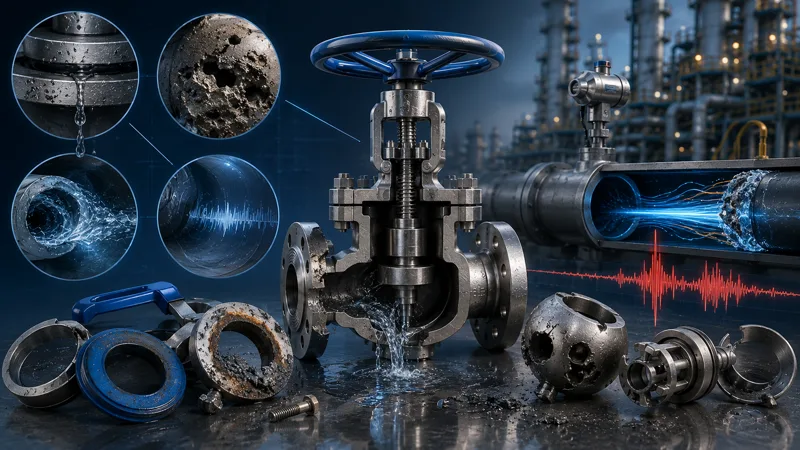
Pitting corrosion in stainless steel valves is a self-accelerating electrochemical attack that initiates at microscopic defects in the chromium-rich passive oxide film and propagates downward into the metal as a narrow, deep cavity — creating a localized penetration that can perforate a valve body wall or seat area while the surrounding surface retains its metallic appearance and the overall material loss measured by weight is negligible. The insidious nature of pitting — invisible during routine visual inspection, growing beneath a surface that appears intact, and producing sudden through-wall failure without warning deformation — makes it one of the most dangerous failure modes in stainless steel valve service and a primary consideration in material selection for any service containing chloride ions above threshold concentrations. For a comprehensive overview of valve material engineering, see industrial valve material selection fundamentals.

Key Takeaways

  • Pitting is a localized corrosion mechanism triggered by passive film breakdown — chloride ions concentrate at specific sites (inclusions, surface defects, weld heat-affected zones), displacing the oxygen needed to maintain the oxide film and creating a small active area surrounded by a large passive area that concentrates corrosion current into a narrow, rapidly propagating pit.
  • Chloride ions are the primary cause in industrial environments — their small ionic radius allows penetration of the passive film at grain boundaries and inclusion interfaces, making pitting autocatalytic once initiated and independent of bulk environment conditions. See controlling chloride-induced corrosion for prevention strategy overview.
  • Higher PREN stainless steels offer improved resistance — PREN = %Cr + 3.3×%Mo + 16×%N quantifies each alloying element’s contribution to passive film stability. See PREN comparison of duplex grades for grade-by-grade resistance evaluation.
  • Pitting can compromise pressure integrity without visible general corrosion — a valve body with pitting perforation may pass ultrasonic wall thickness measurement and visual inspection yet have lost all pressure containment capability at the pit location.

How It Works

The electrochemical mechanism of pitting corrosion follows a two-stage process — initiation and propagation — governed by different thermodynamic and kinetic conditions. During initiation, passive film breakdown occurs at susceptible sites: manganese sulfide (MnS) inclusions are the most common initiation sites in wrought stainless steels; weld heat-affected zones where chromium carbide precipitation depletes chromium at grain boundaries below the 10.5% minimum for passivity; and mechanical surface damage that disrupts the uniform passive film.

Once a pit initiates, the propagation stage is autocatalytic — ferrous ions inside the pit hydrolyze generating acid that further breaks down the passive film; chloride ions migrate into the pit to maintain electrical neutrality; and the net result is a pit interior pH that may reach below 2.0 even when the bulk fluid is near neutral. This aggressive internal chemistry means the pit continues propagating independent of bulk environment conditions. For the relationship between pitting initiation and chloride-induced stress corrosion cracking — a related but distinct mechanism that frequently follows pitting in high-stress valve components — the two mechanisms often operate concurrently in warm chloride environments.

Main Components

Material Composition and PREN

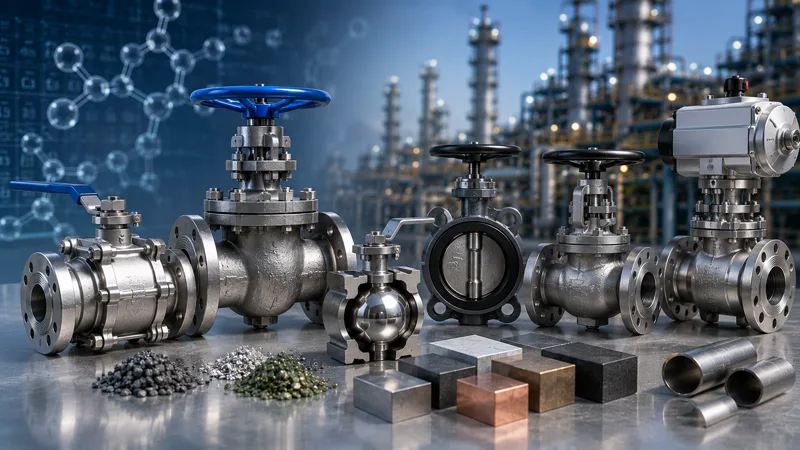
PREN is the primary quantitative material selection criterion for pitting resistance in chloride environments, allowing objective comparison between alloy grades on a single numerical scale. The table below compares PREN values and seawater pitting resistance for the principal stainless steel grades used in industrial valve bodies:

Material Grade UNS Designation Typical PREN Seawater Suitability Typical Application
Type 304 / CF8 S30400 / J92600 18–20 Not suitable for immersion Freshwater, food, low-chloride chemical
Type 316L / CF8M S31603 / J92900 23–27 Not suitable for continuous immersion Dilute acid, low-chloride process
Duplex 2205 S31803 / S32205 33–38 Marginal — moderate seawater only Produced water, moderate offshore
Super duplex 2507 S32750 40–43 Suitable for seawater immersion Offshore seawater injection, FPSO
6Mo austenitic (AL-6XN) N08367 45–47 Suitable including hot seawater Desalination, high-temperature seawater
Alloy 625 N06625 48–52 Excellent — all seawater conditions Subsea, extreme offshore, hot brine

For a direct comparison between the 304 and 316 grades at the lower end of this spectrum, see 304 vs 316 stainless steel pitting resistance — including the specific chloride concentration and temperature conditions under which 316L’s molybdenum addition provides meaningful resistance margin over 304. For the duplex stainless steel PREN characteristics that place duplex 2205 above standard austenitic grades, and for super duplex stainless steel properties that exceed the PREN 40 seawater threshold, the two-phase microstructure provides both strength and corrosion resistance advantages. For nickel alloy pitting performance at PREN values above 48, see nickel alloy resistance to pitting corrosion.

Environmental Factors

The four environmental parameters most strongly influencing pitting initiation and propagation are chloride concentration, temperature, pH, and flow velocity. Chloride concentration acts as the primary passive film-breaking agent — the critical chloride threshold for Type 316L stainless is approximately 200 ppm at 25°C, making it susceptible in most produced water and brackish water systems; for super duplex 2507, the critical threshold exceeds 19,000 ppm (natural seawater concentration) at ambient temperature. For complete seawater service material selection guidance, see seawater corrosion-resistant valve materials.

Temperature has a particularly strong effect — the critical pitting temperature (CPT) is approximately 0°C for Type 304, 15°C for Type 316L, 35°C for duplex 2205, and above 50°C for super duplex 2507, explaining why 316L may perform adequately during cold commissioning but pits rapidly at operating temperature. For high-temperature pitting resistance requirements in hot seawater and brine service, the CPT threshold directly governs minimum alloy grade selection. In environments combining high chloride with H₂S contamination, see H2S and chloride combined corrosion risk for the additional sour service constraints that apply alongside pitting resistance criteria.

Surface Condition

Surface condition has a significant and often underappreciated influence on pitting initiation susceptibility — two components of identical alloy grade can have substantially different pitting resistance depending on surface finish, cleanliness, and passivation state. MnS inclusions elongated by metal-working operations are the most common pitting initiation sites in wrought stainless steel stems and forgings. Surface roughness increases pitting susceptibility by creating microscopic crevices that accumulate chlorides — smoother surface finishes (Ra below 0.8 µm) provide better pitting resistance than machined surfaces (Ra 1.6–3.2 µm) in the same alloy and environment. For seat contact surface conditions where pitting initiation is especially consequential to sealing performance, see corrosion-resistant seat materials for surface finish and alloy selection guidance.

Iron contamination from carbon steel tooling or contact with carbon steel components on stainless steel surfaces creates galvanic cells that initiate pitting at contamination sites — a particular risk during valve assembly. For the electrochemical mechanism governing this interaction, see galvanic corrosion in chloride environments.

Testing and Verification

Standard production pressure testing verifies pressure integrity at the time of manufacture but provides no information about long-term pitting resistance in service — hydrostatic testing detects only existing through-wall defects, not early-stage pitting that will penetrate the wall months later. Production verification of pitting resistance is therefore achieved indirectly through material certification — confirming by EN 10204 3.1 chemical analysis that the PREN-determining elements (Cr, Mo, N) meet the minimum composition requirements of the specified grade. A certificate stating “meets Grade S32750” without listing actual Cr, Mo, and N percentages does not provide sufficient information to confirm PREN compliance. For fitness-for-service assessment of valves already in service, ultrasonic thickness measurement combined with endoscopic visual inspection or phased array ultrasonic testing (PAUT) is required to detect small-diameter pit geometries that standard UT cannot resolve.

Advantages of Understanding and Controlling Pitting

Correct initial alloy selection using PREN as the primary criterion prevents the systematic installation of under-specified alloys — such as 316L in seawater service — that produce predictable early-failure patterns costing far more in replacement and downtime than the alloy upgrade at specification stage. The duplex vs super duplex pitting resistance comparison quantifies this selection decision: duplex 2205 at PREN 35–38 fails in warm stagnant seawater; super duplex 2507 at PREN 40–43 provides reliable long-term seawater resistance.

For the most aggressive pitting environments where even super duplex reaches its resistance limits, titanium resistance to chloride pitting provides an alternative material basis — titanium’s passive film mechanism differs fundamentally from PREN-based stainless steel resistance and provides reliable chloride pitting immunity across a wide temperature range. Pitting-induced through-wall perforation of valve bodies and stem seals directly undermines fugitive emission control boundaries and fire safe structural integrity — making pitting prevention a prerequisite for maintaining both emission compliance and fire safe certification throughout the valve’s service life. For comprehensive corrosion prevention strategies that integrate pitting control with protection against other concurrent corrosion mechanisms, see valve corrosion prevention strategies.

Typical Applications

In offshore seawater systems — firewater deluge, seawater lift, and injection systems — the combination of approximately 19,000 ppm chloride and ambient-to-operating temperature creates the most common pitting failure scenario for under-specified stainless steel valves. Many early offshore installations used 316L stainless (PREN 25) in seawater service and experienced pitting failures within 2–5 years, driving the industry shift to super duplex (PREN 40+) as the minimum standard for direct seawater contact. For the full seawater material selection framework, see stainless steel selection for seawater service.

In oil and gas produced water handling, chloride concentration may increase substantially over field production life as water cut increases — stainless steel valve specifications based on early-field chloride levels may become inadequate, requiring material review as part of field development planning. Where acid contamination combines with chloride exposure, see acid-resistant stainless steel selection for the combined pH and chloride resistance requirements. In desalination plants, concentrated brine at temperatures up to 65°C exceeds the pitting resistance of all austenitic stainless steels and most duplex grades, requiring 6Mo austenitic or super duplex minimum for brine-contact valves. For cryogenic stainless steel material requirements where chloride pitting must be addressed alongside low-temperature toughness, austenitic grades such as CF8M provide the combination of pitting resistance and impact toughness needed for LNG and cryogenic chemical service.

Frequently Asked Questions

Why does stainless steel pit in seawater?

Stainless steel pits in seawater because natural seawater’s chloride concentration (approximately 19,000 ppm) exceeds the critical passive film breakdown threshold for standard austenitic grades at temperatures above approximately 15°C. The Cl⁻ ions penetrate the passive oxide film at grain boundaries and inclusion interfaces, displacing the oxygen needed to maintain and repair the film. Once locally breached, the autocatalytic pit chemistry — acid generation by metal ion hydrolysis, chloride migration, oxygen exclusion — makes the pit self-sustaining. See why 316 fails in seawater for a detailed explanation of why even the molybdenum addition in 316L is insufficient to prevent this mechanism at seawater chloride concentrations.

Is 316 stainless steel resistant to pitting?

Type 316L (PREN approximately 23–27) offers meaningfully better pitting resistance than Type 304 (PREN 18–20) due to its 2–3% molybdenum content. In cold, flowing, low-chloride environments below approximately 200 ppm Cl⁻ at temperatures below 15°C, 316L provides adequate resistance. In warm or stagnant seawater, in produced water above 1,000 ppm chloride at operating temperature, and above its critical pitting temperature of approximately 15–20°C in seawater-concentration chloride, 316L pits reliably. The when stainless steel outperforms carbon steel comparison clarifies that while 316L is superior to carbon steel in many environments, its chloride resistance has defined limits that require careful service condition analysis before specification.

How can pitting corrosion be prevented?

Pitting prevention combines four complementary strategies: alloy upgrade to PREN above the critical threshold for the service chloride concentration and temperature; surface finish improvement to Ra below 0.8 µm and passivation treatment to minimize initiation sites; operational control to prevent stagnant flow conditions where local chloride concentration builds above bulk levels; and electrochemical protection through cathodic protection for submerged or buried stainless steel components. For seawater immersion service, the combination of high PREN stainless steel material (PREN above 40) with cathodic protection provides defense-in-depth pitting prevention covering both bulk surfaces and crevice zones under gaskets and threaded connections. See corrosion-based alloy selection strategy for the systematic evaluation framework.

Does hydrostatic testing detect pitting corrosion?

Hydrostatic production testing detects only defects causing leakage at the time of testing — it detects a pre-existing through-wall pit perforation but will not detect a pit that has penetrated 80% of the body wall and will perforate within months of commissioning. Long-term pitting resistance is a material property determined by alloy composition (quantified by PREN and verified by EN 10204 3.1 chemical analysis), not a property detectable by mechanical pressure testing. For the relationship between erosion-corrosion vs pitting corrosion mechanisms in high-velocity valve service where both forms of localized attack may operate concurrently, separate material evaluation criteria apply to each mechanism.

Conclusion

Pitting corrosion in stainless steel valves is a self-accelerating electrochemical attack driven by chloride-induced passive film breakdown that produces localized deep penetrations invisible to routine inspection — making it a pressure integrity risk that must be prevented through correct initial alloy selection rather than managed through inspection after initiation. The PREN formula provides the quantitative tool for alloy selection against pitting, with the 40 threshold establishing the minimum for seawater immersion service, and EN 10204 3.1 chemical analysis providing the traceable evidence that the installed alloy achieves the specified PREN in practice. For a comprehensive framework integrating pitting corrosion prevention within the full scope of valve material engineering, visit industrial valve material selection fundamentals.