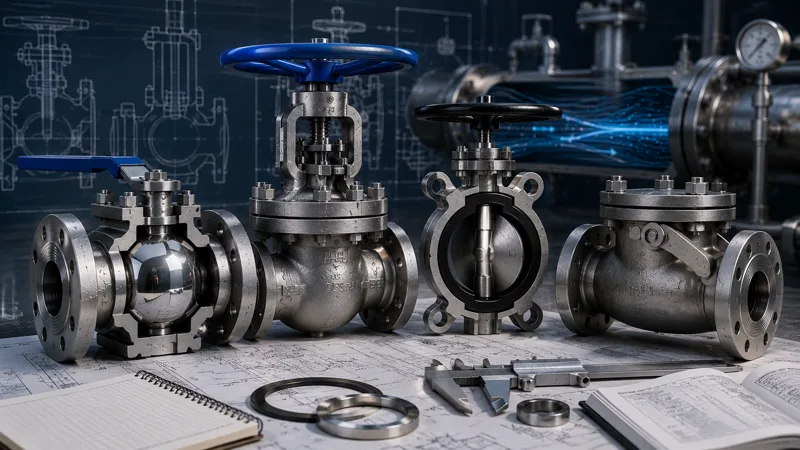
Valve Installation Orientation: Importance and Mechanics

What Is Valve Installation Orientation and Why Does It Matter?

Valve installation orientation refers to the specified positioning and flow direction of a valve within a piping system to ensure correct mechanical operation, sealing performance, and safety. Proper orientation aligns internal components with gravity, flow dynamics, and actuator requirements to prevent malfunction and premature wear.

  • Some valves require specific flow direction for proper sealing.
  • Gravity-sensitive valves depend on correct vertical or horizontal positioning.
  • Incorrect orientation can impair operation and increase wear.
  • Manufacturer guidelines must be followed during installation.

How Does Valve Installation Orientation Work?

Valve installation orientation ensures that every internal mechanism operates according to its design parameters by positioning the valve body, closure element, stem, and actuator in the geometry assumed by the manufacturer during engineering and testing. Certain valve types rely entirely on gravitational force, forward flow pressure, or reverse differential pressure to move their closure elements between open and closed positions. When these valves are installed in a geometry that reverses or eliminates the intended driving force, the closure element either fails to open under normal flow, fails to close against reverse flow, or operates with significantly degraded response speed and seating force.

Flow-direction arrows cast or stamped on valve bodies indicate the intended media direction and must align with the process flow path before any flanges are bolted up. Installing a valve against this indicated direction can prevent proper seating in globe valves, reverse the pressure loading on control valve trim, or allow backflow through check valves that should remain closed. Beyond flow direction, orientation also governs stem angle relative to horizontal or vertical, which affects the dead-weight load on packing systems, the accessibility of the gland for maintenance, and the structural demands on actuator mounting brackets. All orientation requirements must be confirmed against the manufacturer’s installation manual and the process piping isometric drawing before final bolt tightening and commissioning activities begin.

Flow Direction Requirements

Flow direction is the most commonly specified and most frequently violated orientation requirement in valve installation practice. Globe valves and angle valves are designed with a preferred flow-under or flow-over seat arrangement that determines whether system pressure assists or opposes valve closure—installing them backwards reverses this arrangement and can cause the valve to slam shut under pressure or require excessive actuator force to open against the seated load. Control valves with characterized trim rely on predictable pressure recovery behavior that is calibrated for a specific flow direction, and reversing it shifts the flow characteristic away from the design curve. Marking verification and physical confirmation against the piping isometric are mandatory steps in any proper valve installation procedure and a core requirement of sustainable valve maintenance.

Vertical vs. Horizontal Positioning

The body axis orientation—whether the valve is installed with its bore running horizontally, vertically upward, or vertically downward—determines how gravity acts on the closure element during operation and in the resting state. Swing check valves are specifically designed for horizontal installation where the disc hangs freely from its hinge pin under gravity and swings closed when forward flow velocity drops to zero; installing a swing check valve in a vertical downward-flow line allows gravity to hold the disc open regardless of flow velocity, eliminating backflow prevention entirely. Tilting disc check valves and dual-plate wafer check valves tolerate a wider range of installation orientations but still have published limits on acceptable mounting angles that must be verified against the manufacturer’s specification before installation is finalized.

Stem and Actuator Positioning

Stem orientation relative to the horizontal plane determines the magnitude and direction of the dead-weight load that the packing system must support in addition to the process pressure sealing load. A stem installed pointing vertically downward subjects the packing to the combined weight of the stem, disc, and any attached handwheel or actuator components as a continuous compressive load that accelerates packing extrusion and increases the risk of packing blowout if the gland follower loosens. Actuated valves require sufficient overhead or lateral clearance for the actuator to complete full travel without obstruction, and mounting brackets must be sized to carry actuator weight without transmitting bending moments into the valve body. Correct stem positioning supports reliable manual valve operation and long-term valve maintenance access.

Main Components Affected by Orientation

Incorrect installation orientation does not affect the valve uniformly—it concentrates its consequences in the specific components whose function depends most directly on the geometric relationship between the valve body, the closure element, and the direction of gravity and flow. Understanding which components are most sensitive to orientation errors allows inspection teams to target their post-installation verification and helps maintenance planners identify the components most likely to show accelerated deterioration when orientation defects are discovered retrospectively after a period of service.

Valve Disc or Closure Element

The closure element—whether a disc, ball, gate wedge, plug, or diaphragm—is the component most immediately and directly affected by incorrect installation orientation. In gravity-assisted designs such as swing check valves and weighted-disc butterfly valves, the closure element depends on gravitational force to return to the closed position when forward flow ceases. Installing these valves in an orientation where gravity acts perpendicular to or in opposition to the required closure direction eliminates this restoring force, causing the valve to remain open when it should close or to close sluggishly with reduced seating force that is insufficient to resist reverse pressure. Damage to the disc seating surface resulting from repeated impact closure in an incorrect orientation compounds the functional problem with a progressive sealing degradation.

Sealing Surfaces and Seats

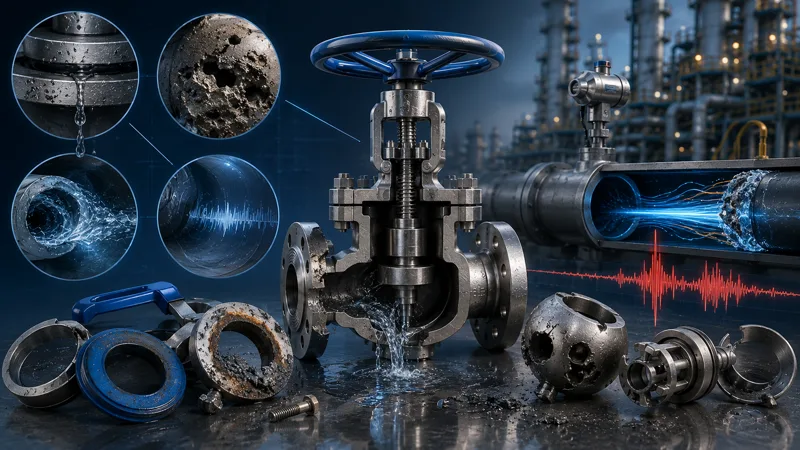
Valve seats are machined to precise geometric tolerances that achieve tight shutoff through uniform contact stress distributed around the full seating circumference. When incorrect orientation changes the effective direction of gravity or flow-induced loading on the closure element, the contact force between disc and seat is concentrated on one sector of the seating surface rather than distributed uniformly. This uneven loading accelerates wear on the loaded sector while the opposite sector experiences insufficient seating stress and leaks, producing a characteristic crescent-shaped seat leak pattern that cannot be resolved by lapping or grinding without addressing the underlying orientation error. A valve seat leakage test performed after installation confirms whether seating contact is adequate under the installed orientation as part of the valve maintenance verification process.

Packing and Stem Assembly

Stem packing performance is sensitive to the orientation-dependent load imposed on the packing rings by the weight of the stem and closure element assembly. In vertically downward stem installations, this weight adds a sustained compressive load to the packing that is absent in horizontal or upward-stem configurations, increasing the rate of packing creep and requiring more frequent gland adjustment to maintain leak-tight sealing. Conversely, in vertically upward stem configurations, the stem weight reduces the effective packing contact stress slightly, which can allow minor packing seepage at lower line pressures if the initial packing installation was set to a minimum acceptable preload. Understanding these orientation-dependent effects informs the correct initial gland setting and the appropriate interval for replace valve packing activities within the valve maintenance schedule.

Flange Connections

The physical process of rotating a valve into its correct orientation after initial positioning can introduce angular misalignment between the valve flange faces and the mating pipe flanges if the valve is rotated while resting on its flange faces rather than being repositioned with rigging. This rotation-induced misalignment imposes the same bending stress on the valve body as any other form of pipe misalignment, and it can be difficult to detect visually once the valve has been brought into approximately the correct rotational position. Verifying valve pipe alignment after orientation is confirmed and before applying valve bolt torque ensures that orientation correction has not inadvertently introduced a misalignment defect into the completed assembly under the valve maintenance framework.

Advantages of Correct Valve Orientation

Installing valves in their correct orientation from the outset delivers performance advantages that extend throughout the entire service life of the asset, eliminating a category of functional and mechanical failures that are entirely preventable at the time of installation. The cost of verifying orientation during installation—a task requiring minutes of technician time with the valve already in position—is negligible compared to the cost of diagnosing and correcting orientation-induced failures after the system has been commissioned and placed in service.

Reliable Automatic Operation

Check valves, weighted-disc butterfly valves, and other automatic-closure designs function reliably only when installed in the orientation for which their closure mechanism was designed. Correct orientation ensures that every automatic operation cycle—opening under forward flow and closing against reverse flow—occurs within the force and timing parameters assumed in the system’s hydraulic design. Reliable automatic closure prevents backflow events that can damage pump impellers, cause pressure surge in adjacent systems, or allow process contamination between process streams that must remain isolated from each other.

Improved Sealing Performance

Uniform contact stress around the full seating circumference, achieved when the closure element approaches its seat with the loading geometry the manufacturer designed for, produces the lowest possible seat leakage rate and the most consistent shutoff performance across the valve’s operating life. Correct orientation eliminates the asymmetric loading patterns that concentrate wear on one sector of the seat and create persistent leak paths that cannot be resolved by maintenance without seat replacement. Maintaining this sealing performance baseline reduces the frequency of corrective maintenance interventions required to manage seat leakage throughout the service lifecycle.

Reduced Mechanical Wear

Internal misalignment caused by incorrect orientation generates friction between the closure element and its guides or body bore during every operating cycle, progressively removing material from contact surfaces and introducing metallic debris into the process fluid. This debris can score downstream components, contaminate sensitive process streams, and return to the valve body to cause additional wear in a self-reinforcing degradation cycle. Correct orientation aligns all internal moving parts with their design travel path, eliminating the lateral contact forces that cause off-axis wear and extending the interval before internal trim replacement is required.

Easier Maintenance Access

Manufacturer-recommended orientation typically places the gland, bonnet, and actuator in positions that allow safe and convenient access for the maintenance activities that will be required throughout the valve’s service life. Valves installed in non-standard orientations to accommodate piping constraints may present their gland followers in inaccessible locations, require removal of adjacent pipework for actuator maintenance, or position drain and vent connections in directions that cannot be safely used. Maintaining correct orientation supports the practical execution of scheduled valve inspection frequency requirements and reduces the time and cost of routine valve maintenance activities across the service lifecycle.

Typical Applications Where Orientation Is Critical

While orientation requirements apply to all valve types, the functional consequences of incorrect orientation are most severe and most immediately apparent in specific valve designs and operating scenarios. Recognizing the applications where orientation errors produce the most significant performance degradation helps installation teams and maintenance supervisors prioritize orientation verification activities and allocate sufficient oversight to the installation stages where errors are most likely to occur and most costly to correct.

Check Valves in Pump Systems

Check valves installed at pump discharge connections provide the critical backflow prevention function that protects pump internals from reverse-rotation damage during shutdown and prevents siphoning of process fluid back through the pump when the discharge pressure exceeds the suction pressure. An incorrectly oriented swing check valve that fails to close against reverse flow allows the full system discharge pressure to act on the pump impeller in reverse, driving it backward at speeds that can exceed the forward design speed and cause catastrophic impeller and shaft seal failure within seconds of pump shutdown. Verifying check valve orientation is therefore a mandatory step in the valve commissioning procedure for all pump system installations within the valve maintenance framework.

Control Valves in Process Systems

Control valves are engineered with specific trim geometries that produce defined flow characteristics—linear, equal percentage, or quick-opening—under specified inlet and outlet pressure conditions and in a defined flow direction. Installing a control valve in the reverse flow direction shifts its effective flow characteristic, changes the pressure recovery behavior at the trim exit, and alters the relationship between valve travel and actual flow rate in ways that cannot be compensated by control loop tuning alone. In applications where the control valve must also provide tight shutoff against maximum system differential pressure, incorrect flow direction may place the full differential pressure in a loading direction that the actuator was not sized to overcome. Operating within the defined valve safe operating range requires that control valves be installed with correct orientation as a foundational requirement of valve maintenance.

High-Pressure Installations

In high-pressure systems, the forces acting on internal valve components—closure elements, seats, and stems—are substantially larger than in low-pressure applications, and any orientation-induced asymmetry in how these forces are distributed across seating surfaces or guide components produces accelerated wear rates proportional to the increased force magnitude. Flange joint integrity under high-pressure hydrostatic test conditions is also sensitive to orientation-related misalignment, as test pressure amplifies any stress concentration introduced by angular flange misalignment during orientation adjustment. Completing valve hydrostatic testing only after both orientation and pipe alignment have been verified ensures that high-pressure test loads are applied to a correctly assembled joint within the valve maintenance program.

Installation and Startup Procedures

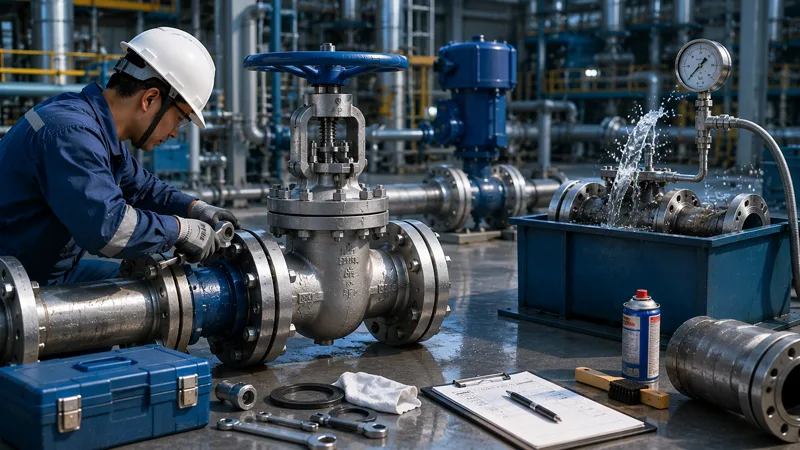
Orientation verification must be completed as a documented step before system pressurization and startup, because pressurizing a system containing incorrectly oriented valves can cause immediate functional failures or internal damage that requires depressurization, disassembly, and reorientation before the system can proceed to normal operation. Startup procedures should include a physical walkdown that confirms orientation markings, stem directions, and actuator clearances against the piping isometric drawings before any isolation valves are opened or pumps are started. Following the defined valve start-up procedure and ensuring that all orientation requirements are satisfied before committing to operation, with provision for correct isolation using the valve shut-down procedure if defects are found, protects both the equipment and the overall valve maintenance investment.

Frequently Asked Questions

Can all valves be installed in any orientation?

No. Many valve types require specific vertical or horizontal positioning to function correctly. Swing check valves, gravity-return globe valves, and certain diaphragm valves are among the designs with mandatory orientation requirements that must be confirmed against manufacturer specifications before installation is finalized. Installing these valves in an unsupported orientation can prevent proper closure or seating under operating conditions.

Why is flow direction marking important?

Flow direction markings indicate the orientation in which the valve’s internal trim geometry produces its specified flow characteristic, seating behavior, and pressure drop performance. Installing a valve against its marked flow direction reverses these characteristics, potentially causing incorrect shutoff behavior, excessive pressure drop, or control instability that cannot be resolved by operational adjustment without physically reorienting the valve in the piping system.

Does orientation affect sealing performance?

Yes. Incorrect orientation changes the direction and magnitude of the force with which the closure element contacts its seat, creating uneven contact stress that concentrates wear on one sector of the seating surface while leaving other sectors under-loaded and susceptible to leakage. This asymmetric wear pattern progressively degrades shutoff performance and cannot be corrected by seat lapping or adjustment without first correcting the underlying orientation error.

Should orientation be checked before commissioning?

Yes. Orientation verification is a mandatory step in the pre-commissioning inspection sequence, required before system pressurization and startup. Commissioning a system with incorrectly oriented valves risks immediate functional failures and internal damage that can only be corrected by depressurizing and disassembling the affected connections, consuming significantly more time and resources than a pre-commissioning orientation check would have required.

Conclusion

Valve installation orientation is a critical parameter that governs the mechanical function, sealing performance, and long-term reliability of every valve in an industrial piping system. Following manufacturer guidelines for flow direction, body axis positioning, and stem and actuator placement prevents malfunction, uneven seat wear, and premature component failure from the first day of operation. Correct orientation is a foundational requirement of effective valve maintenance and safe, reliable system performance throughout the full design service lifecycle.