
Cast steel and forged steel are the two manufacturing routes for carbon and alloy steel valve bodies, and the choice between them is one of the most common questions in valve specification. The difference is not in chemistry - cast WCB carbon steel (ASTM A216) and forged A105 carbon steel are nearly identical in composition - but in how the metal is shaped, which in turn changes its internal structure, strength, achievable geometry, and cost. Within the valve materials classification system, understanding the cast-versus-forged trade-off is what lets an engineer pick the right body for a given size, pressure class, and budget rather than defaulting to one route for every valve.
Key Takeaways
- Cast and forged valve bodies can share the same steel chemistry; the difference is the manufacturing route - molten metal poured into a mould (cast) versus solid metal shaped under pressure (forged).
- Forged steel (A105) has a continuous, void-free grain structure giving higher strength and better fatigue and impact resistance, favoured for small-bore and very high-pressure valves.
- Cast steel (A216 WCB) allows complex, large geometries economically and is the practical choice for valve bodies 2 inches and larger.
- Industry standards split along this line: API 600 covers cast steel gate valves (2 inches and up), while API 602 covers forged steel valves (below 2 inches).
How It Works
Two Manufacturing Routes
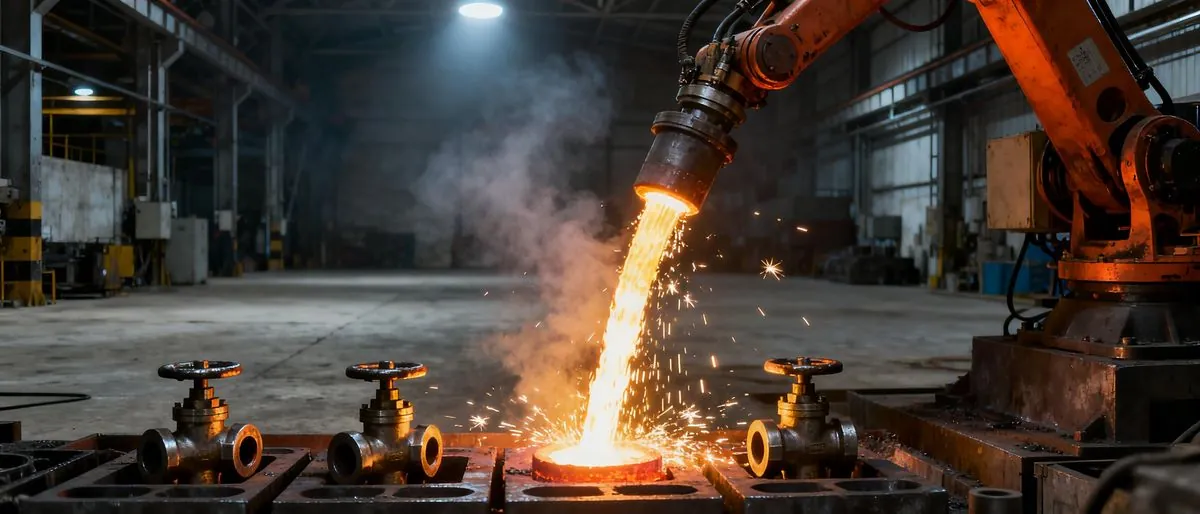
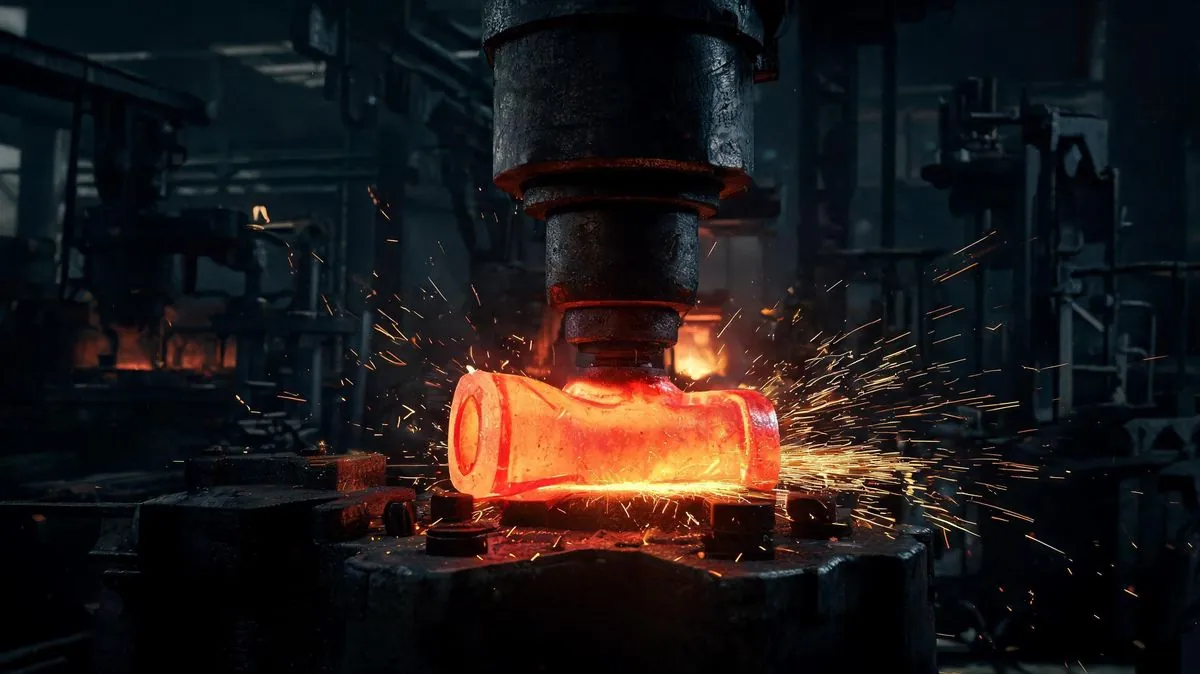
A cast valve body is formed by pouring molten steel into a mould shaped to the finished body and letting it solidify, after which it is heat-treated and machined. A forged body is formed by taking a solid billet of steel and deforming it under great pressure - hammering or pressing - into the required shape while hot. The poured route gives near-net complex shapes directly; the deformation route refines the metal's internal structure but is limited in the complexity and size of shape it can practically produce. This single difference in route is the source of every downstream distinction in strength, integrity, size, and cost.
Grain Structure and Integrity
Forging mechanically works the steel, producing a continuous grain flow that follows the shape of the part and eliminates the internal porosity and voids that can form as molten metal solidifies in a casting. This denser, more uniform structure gives forged A105 superior resistance to fatigue, impact, and high-pressure surges, and means a forged body has no risk of the gas pockets or shrinkage cavities that a casting must be inspected for. Castings are not inherently unsound - reputable foundries control porosity through process discipline and non-destructive testing - but a forging's integrity is intrinsic to the process rather than something that must be verified and managed.
Size and Geometry Limits
Casting's great advantage is geometric freedom: the complex internal flow passages and large external contours of gate, globe, and check valve bodies can be produced directly in a mould at almost any size. Forging cannot economically reproduce such complex shapes, and becomes impractical for large bodies, so forged valves are concentrated in small-bore sizes (typically below 2 inches) with simpler geometries. As a result, the manufacturing route is largely dictated by valve size: small valves are forged, large valves are cast, with the crossover around 2 inches.
The Key Differences
Strength and Pressure
Because forged metal is denser and void-free, forged A105 bodies are preferred where pressure is highest - particularly Class 1500 and Class 2500 service, where engineers commonly mandate forged steel because even a microscopic casting defect could escalate into a crack under extreme pressure. Cast WCB is entirely adequate for the Class 150 to 600 range that covers most plant service; because casting has somewhat lower mechanical properties, cast bodies are designed with thicker walls than the equivalent forged body to provide the same pressure integrity.
Porosity and Defects
The central technical concern with castings is internal porosity - gas pockets or shrinkage cavities that can form during solidification. Quality foundries manage this with controlled casting practice and non-destructive testing (radiography, ultrasonic, magnetic-particle), so well-made castings are sound, but the possibility exists and must be inspected against. Forgings have no equivalent concern, which is the core reason forged bodies are chosen for the most safety-critical and high-pressure duties where the consequence of a hidden defect is greatest.
Cost and Size
For large and complex bodies, casting is far more economical - often the only cost-effective route - because forging such shapes would require enormous presses and extensive machining. For small, simple bodies, forging is competitive and its superior properties justify the cost. So cost and size push in the same direction: cast for large and complex, forged for small and high-integrity, which is why the industry settled on the roughly 2-inch dividing line embodied in the API standards.
When to Use Each
When Forged Wins
Forged steel is the right choice for small-bore valves (below 2 inches), for the highest pressure classes (1500 and 2500), and for any service where fatigue loading, impact, or thermal cycling makes the void-free integrity of forged metal valuable. Forged bodies in carbon steel use ASTM A105; alloy and stainless forged bodies use ASTM A182 grades. The detailed standard for small forged valves is covered in the API 602 reference.
When Cast Wins
Cast steel is the right choice for valve bodies 2 inches and larger, for the complex internal geometries of gate, globe, and check valves, and for the Class 150 to 600 service that covers the majority of plant duty - where casting delivers the required integrity at substantially lower cost than forging the same shape would. Cast bodies in carbon steel use ASTM A216 WCB; the full profile of that material is given in the WCB carbon steel reference.
The API 600 vs API 602 Split
The cast-versus-forged decision is institutionalized in the API valve standards: API 600 governs cast (and forged) steel gate valves from 2 inches up, while API 602 governs compact forged steel gate, globe, and check valves below 2 inches. This split mirrors the engineering reality - large bodies cast, small bodies forged - and gives specifiers a standards-based shortcut to the correct manufacturing route for a given valve size.
Typical Applications in Valves
Forged for Small-Bore and High Pressure
Forged A105 bodies dominate instrument, drain, vent, and small process valves below 2 inches, and high-pressure valves in Class 1500 and 2500 steam, hydrogen, and hydrocarbon service where structural integrity is paramount. The compact forged construction also suits the cramped layouts of instrument hook-ups and small-bore piping where robust, leak-tight valves are needed in minimal space.
Cast for Large and Complex Bodies
Cast WCB bodies dominate the larger gate, globe, and check valves that isolate and control main process and utility lines throughout chemical, power, and oil-and-gas plants. The economical production of complex flow passages at large size is exactly what casting provides, making it the default for the bulk of plant valves above 2 inches in non-corrosive Class 150 to 600 service.
Choosing Within a System
In a typical plant, both routes coexist: small-bore forged valves on instrument and auxiliary connections, large cast valves on main lines, with the same carbon steel chemistry throughout. Choosing correctly between them for each valve - by size, pressure class, and criticality - is part of the structured approach in the valve material selection guide, alongside the choice of base material covered in carbon steel vs stainless steel.
Frequently Asked Questions
Is forged steel better than cast steel for valves?
Neither is universally better - they suit different duties. Forged steel (A105) has a continuous, void-free grain structure that gives superior strength, fatigue, and impact resistance, making it the choice for small-bore and very high-pressure valves. Cast steel (A216 WCB) allows complex, large geometries economically and is the practical choice for valve bodies 2 inches and larger. The right answer depends on size, pressure class, and cost, not on one being inherently superior.
What is the difference between A105 and A216 WCB?
A105 and A216 WCB are both low-carbon steels of nearly identical chemistry, but they differ in manufacturing route: A105 is forged (shaped from solid steel under pressure) while A216 WCB is cast (poured molten into a mould). Forging produces a denser grain structure free of porosity; casting permits complex shapes and large sizes. A105 dominates small forged valves below 2 inches; WCB dominates cast valves 2 inches and above.
Why are large valves cast rather than forged?
Large and geometrically complex valve bodies - gate, globe, and check valves above about 2 inches - are cast because forging such shapes would be impractical and far more expensive. Casting pours molten steel directly into a mould of the finished shape, giving complete geometric freedom for internal flow passages and external contours that forging cannot economically reproduce at large size. This is why API 600 covers cast gate valves while API 602 covers forged small-bore valves.
At what pressure do you need forged steel valves?
There is no single threshold, but forged steel becomes the standard choice at the highest pressure classes - typically Class 1500 and Class 2500 - where the void-free integrity of forged metal guards against the small casting defects that could propagate into a failure under extreme pressure. Small-bore high-pressure valves are usually forged regardless of class, while large valves at moderate classes (150-600) are normally cast WCB.
Conclusion
The cast-versus-forged choice for valve bodies comes down to size, pressure, and integrity rather than chemistry. Forged A105 gives the denser, stronger, void-free metal needed for small-bore and ultra-high-pressure valves; cast A216 WCB gives the geometric freedom and lower cost needed for large, complex bodies in general service. The API 600 and API 602 standards encode this split at roughly the 2-inch line. Choosing the right route for each valve, within the broader material decision, is set out in the valve material selection guide.