
WCB is the grade designation for cast carbon steel valve bodies under ASTM A216, and it is by far the most common valve body material in industry - the default choice for isolation and control valves handling non-corrosive water, steam, oil, and gas at moderate temperatures and pressures. Within the valve materials classification system, WCB sits at the economical base tier: chosen whenever the service is not corrosive and not outside the carbon-steel temperature window, so that the higher cost of stainless steel or alloy bodies is reserved for conditions that genuinely require them. Its combination of low cost, ready availability, good strength, and easy weldability makes it the benchmark against which other body materials are compared.
Key Takeaways
- WCB is cast carbon steel specified under ASTM A216 - the standard, lowest-cost valve body material for non-corrosive service.
- Its chemistry is plain low-carbon steel (carbon up to about 0.30%, manganese up to about 1.00%), giving good strength and excellent weldability but no corrosion resistance.
- It is rated for roughly -29C to +425C; above 425C graphitization risk means chrome-moly grades (WC6/WC9) are required, and below -29C low-temperature grades (LCB/LCC) are used.
- WCB bodies are typically cast for valves 2 inches and larger (API 600), while small-bore valves use forged A105 carbon steel (API 602).
How It Works
Cast Carbon Steel Basics
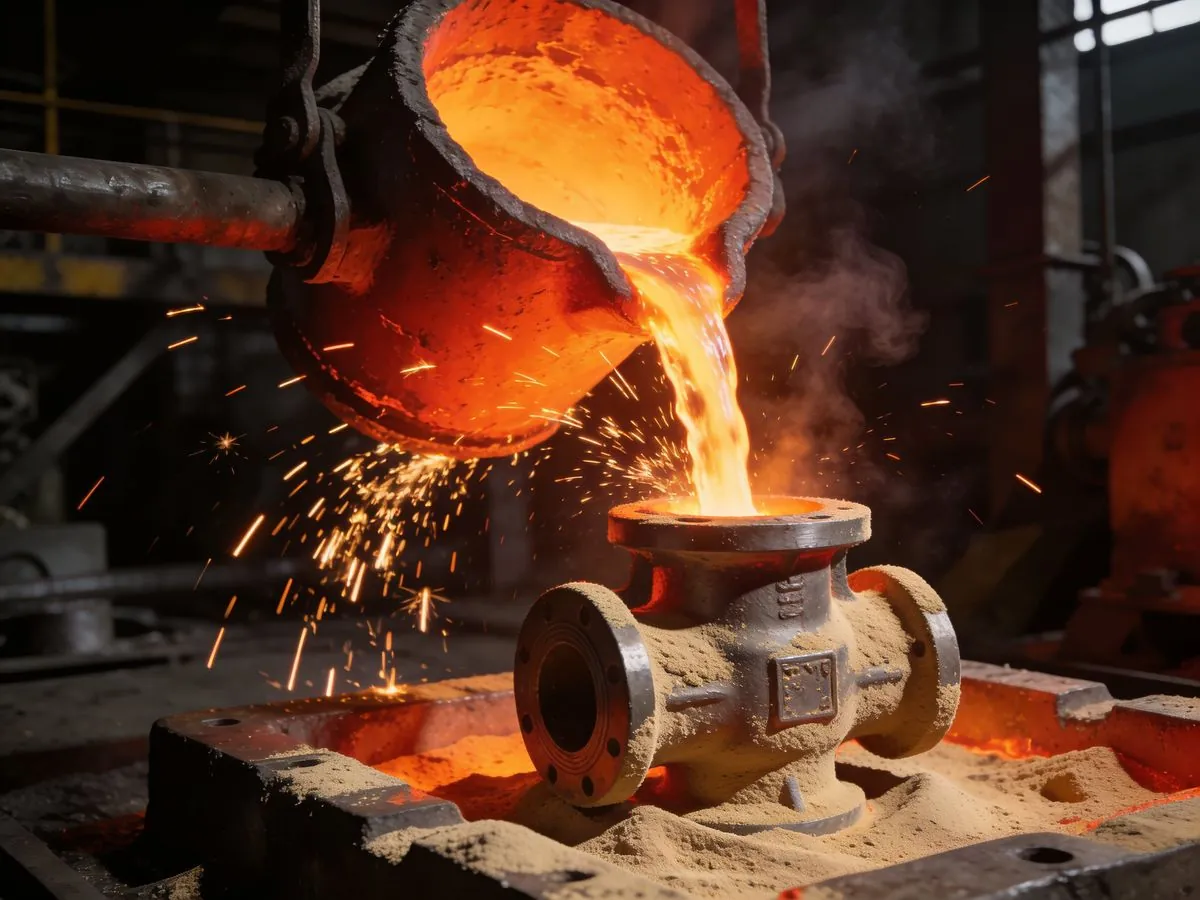
WCB bodies are produced by pouring molten carbon steel into a mould shaped to the valve body, then heat-treating and machining the casting to final dimensions. Casting is the economical route for the complex internal passages and large external shapes of gate, globe, and check valve bodies, especially in sizes above 2 inches where forging the same geometry would be impractical or far more expensive. The cast structure is sound for the great majority of valve service, though castings can contain minor internal porosity that high-quality foundries control through process discipline and non-destructive testing - a distinction explored further in the cast steel vs forged steel comparison.
Composition and Mechanical Properties
ASTM A216 WCB is a plain carbon steel with maximum limits of approximately 0.30% carbon, 1.00% manganese, 0.60% silicon, and 0.035% each of phosphorus and sulphur, plus small residual limits on copper, nickel, chromium, and molybdenum. This chemistry delivers a minimum tensile strength of about 485-655 MPa (70-95 ksi), a minimum yield strength of about 250 MPa (36 ksi), and minimum elongation around 22% - properties that comfortably cover the pressure-containment requirements of Class 150 through Class 600 valves in general service. The controlled, relatively low carbon content is deliberate: it provides adequate strength while keeping the steel readily weldable for fabrication and field repair without complex preheat and post-weld heat treatment in most cases.
The 425C Temperature Ceiling
WCB's practical upper temperature limit of about 425C (800F) is governed not by short-term strength but by graphitization - a long-term metallurgical change in which the iron carbides in carbon steel slowly decompose into graphite nodules that weaken the steel and can lead to cracking after extended high-temperature exposure. Because of this, codes and specifications restrict plain carbon steel valve bodies to roughly 425C for sustained service; above that, chromium-molybdenum alloy grades such as WC6 (1.25Cr-0.5Mo) and WC9 (2.25Cr-1Mo) are specified, as their alloy content stabilizes the carbides against graphitization. The selection of body material against operating temperature, including the step from WCB to alloy grades, is part of the broader framework in the high-temperature valve material reference.
Specification and Limits
The ASTM A216 Family
WCB is one of three grades in ASTM A216: WCA (lower strength), WCB (general purpose), and WCC (higher strength, with tighter manganese and carbon control for greater yield strength at the same pressure class). WCB is the dominant grade because it balances strength, weldability, and cost for the widest range of service. For temperatures below -29C, the equivalent low-temperature cast carbon steels are covered by ASTM A352 grades LCB and LCC, which are impact-tested at low temperature to guarantee toughness; selecting between WCB and a low-temperature grade is a function of the minimum design temperature.
Where WCB Stops
WCB's limits define when to step up to another material: corrosive media require stainless or alloy bodies (see carbon steel vs stainless steel); temperatures above 425C require chrome-moly grades; cold service below -29C requires low-temperature grades; and ultra-high-pressure Class 1500-2500 valves often require forged A105 for its superior structural integrity. Within those boundaries, however, WCB remains the most cost-effective and widely stocked choice, and most general-service valves in a typical plant are WCB.
Advantages in Valve Service
Low Cost and Availability
WCB is the least expensive standard valve body material and is stocked by virtually every valve manufacturer and distributor, so WCB valves are readily available off the shelf in all common types, sizes, and pressure classes. For the large proportion of plant service that is non-corrosive and within the carbon-steel temperature range, specifying WCB avoids paying the substantial premium of stainless or alloy bodies for performance that the service does not require - the single biggest cost-control decision in routine valve specification.
Weldability and Repair
WCB's controlled low carbon content makes it readily weldable, which matters both for fabricating welded-end (butt-weld and socket-weld) valves into piping and for repairing minor casting or service defects. Most WCB welding can be performed with standard procedures, and the material's predictable behaviour under welding heat is a practical advantage over higher-alloy materials that demand strict preheat and post-weld heat treatment control.
Strength for General Service
Despite its low cost, WCB provides ample strength for Class 150 through Class 600 pressure-containment duty across the carbon-steel temperature range, with mechanical properties that meet the pressure-temperature ratings of ASME B16.34 for these classes. For the overwhelming majority of water, steam, oil, and gas valve applications, WCB delivers all the structural capability the service demands, which is precisely why it is the industry default.
Typical Applications in Valves
Water, Steam and Power Service
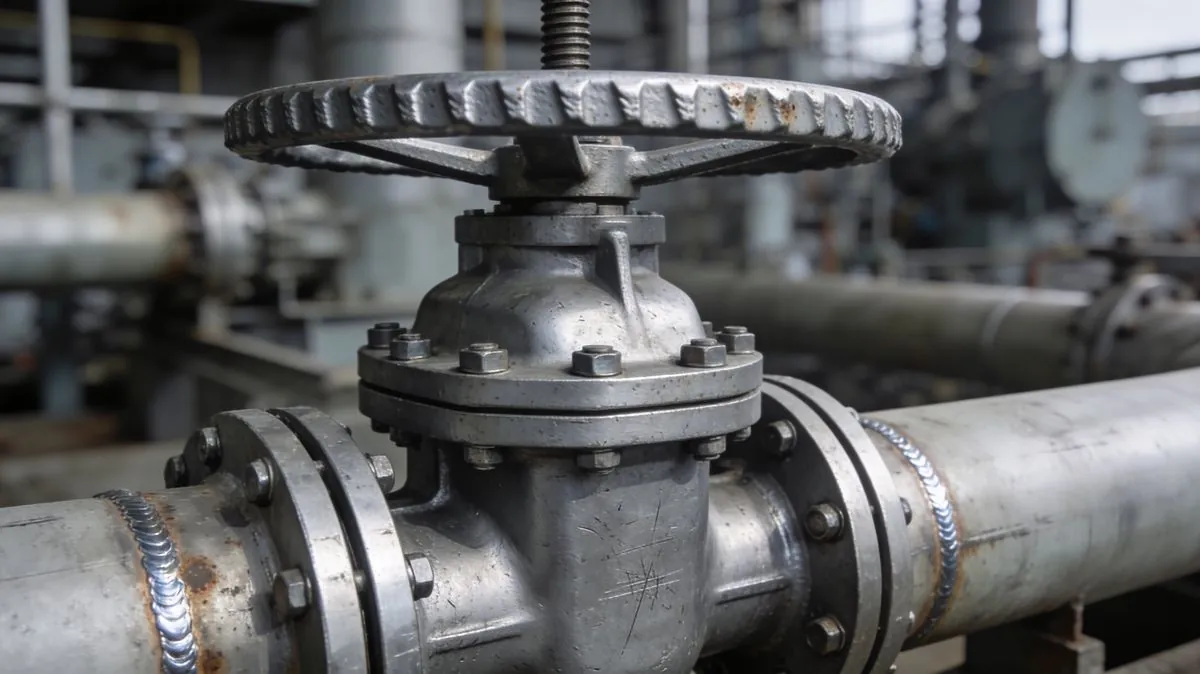
WCB is the standard body material for isolation and control valves in feedwater, condensate, steam, and cooling-water systems in power plants and general industry, where the media are non-corrosive and temperatures stay within the carbon-steel range. Gate, globe, and check valves in these services are predominantly WCB, with the material upgraded to chrome-moly only where steam temperatures exceed the WCB ceiling.
Oil and Gas General Service
In oil and gas gathering, processing, and transport, WCB valves handle the large volume of non-sour, non-corrosive hydrocarbon and utility service where neither corrosion resistance nor extreme temperature capability is needed. Where the service turns sour (hydrogen sulphide present) or corrosive, the body material is upgraded accordingly, but the bulk of general hydrocarbon valve service remains WCB.
Class 150-600 Isolation and Control
Across chemical, petrochemical, and utility plants, WCB is the workhorse for Class 150, 300, and 600 isolation and control valves on non-corrosive lines. The decision framework that places WCB against stainless steel, low-temperature grades, and forged carbon steel based on media, temperature, and pressure is set out in the valve material selection guide, with the cast-versus-forged trade-off detailed in the cast steel vs forged steel comparison.
Frequently Asked Questions
What does WCB stand for in valve materials?
WCB is the grade designation under ASTM A216, the specification for cast carbon steel valve and fitting bodies for high-temperature service. The letters identify the grade within that standard rather than an acronym for a phrase; WCB is the general-purpose carbon steel grade, with WCC being a higher-strength variant and LCB/LCC (under ASTM A352) being low-temperature versions. WCB is the default, lowest-cost body material for valves in non-corrosive service.
What is the temperature limit of WCB carbon steel?
ASTM A216 WCB is generally rated for service from about -29C (-20F) up to +425C (+800F). Above roughly 425C, carbon steel is susceptible to graphitization (the breakdown of carbides that weakens the steel over long exposure), so chromium-molybdenum alloy grades such as WC6 or WC9 are specified for higher temperatures. For cold service below -29C, low-temperature grades such as LCB or LCC are used instead.
What is the difference between WCB and A105?
Both are low-carbon steels of similar chemistry, but WCB (ASTM A216) is cast - molten steel poured into a mould - while A105 (ASTM A105) is forged - solid steel shaped under pressure. Casting allows complex, large valve-body geometries economically; forging gives a denser, defect-free grain structure preferred for small-bore and very high-pressure valves. WCB is typical for cast bodies 2 inches and larger; A105 is typical for forged valves below 2 inches.
Is WCB carbon steel corrosion resistant?
No. WCB is plain carbon steel with no deliberate corrosion-resisting alloying, so it rusts in wet or corrosive service and is limited to non-corrosive media such as water, steam, oil, gas, and dry, non-aggressive process fluids. For corrosive duty, stainless steel, duplex, or nickel-alloy bodies are required; WCB bodies may be internally coated or lined for mildly corrosive service as an economical alternative.
For lower-pressure water and utility service where carbon steel is more than the duty requires, valve bodies are often cast in iron instead; the trade-offs are covered in ductile iron vs cast iron for industrial valves.
Conclusion
WCB carbon steel is the foundation of valve body material selection: the economical, weldable, widely available default for the large share of valve service that is non-corrosive and within roughly -29C to 425C. Knowing WCB's limits - no corrosion resistance, a 425C graphitization ceiling, and a preference for forged A105 at the highest pressures - is what tells an engineer when the standard choice is adequate and when to step up. That decision is structured in the valve material selection guide, and the manufacturing-route side of it in the cast steel vs forged steel comparison.